The Foolish Old Man Removes the Mountains
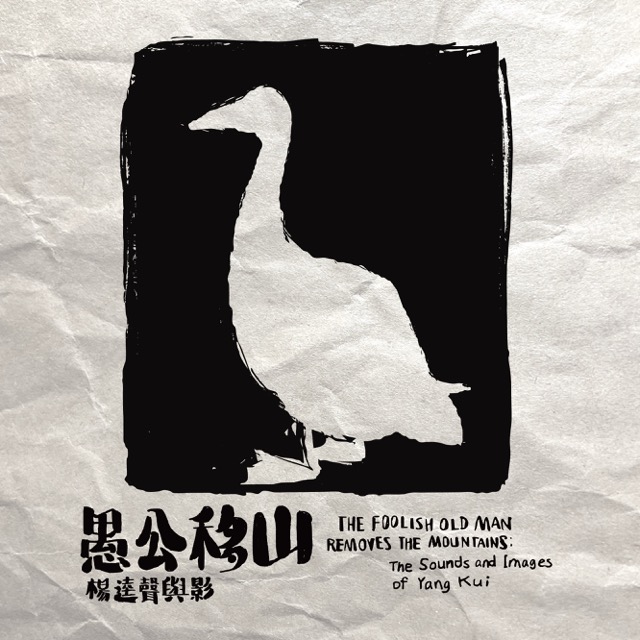
The Foolish Old Man Removes the Mountains: The Sound and Images of Yang Kui in the 1990s
Curator|Hsing-Jou Yeh
By Hsing-Jou Yeh
In recent years, Taiwan’s cultural policies have increased funding for the production of content in the direction of “literary adaptation” and “archival turn.” This has led to a growing trend of “multi-dimensional development of original IP” (novels adapted into dramas, films, and games), as well as the inclusion of “non-material” art genres (such as performance and film) in exhibition mechanisms. At the same time, the discussion of Taiwan’s art history in the 1990s has focused on the development of small theaters, documentaries, experimental films, and experimental noise. This has led art historians, critics, and curators to rethink their historical narrative structures and exhibition techniques. They must now consider how to integrate different perspectives, how to represent history, and how to create values from the dialogues between history and contemporary society.
In the face of this irreversible epistemological change, I have reflected on my recent interest in the independent filmmaking practices of director Huang Mingchuan in the 1990s. This led me to a new understanding of the “Taiwan Literature” Literary Documentaries (1994-1997) published by Avanguard Publishing House This series of four films documents the lives of Dong Fang-bai (1994), Lai Ho (1994), Lin Shuang-bu (1995), and Yang Kui (1997). From the perspective of media development history, it is not a new or innovative act to shoot personal documentaries in the 1990s. In fact, it is a natural development of media. However, I am curious about how Avanguard Publishing House, which has published a prestigious collection of 50 Taiwanese literary works entitled “Litterateurs’ Complete Works in Taiwan” since the late 1980s, could come up with the idea of crossing over into audiovisual media and producing documentaries to commemorate writers.
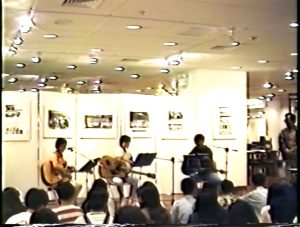
Coincidentally, five or six years before the release of the documentary on Yang Kui (1997), the then-called “young Taiwanese protest singer” Chu Yueh-Hsin (PigHeadSkin) created the song “Rose” in tribute to Yang Kui’s “Uncontainable Spring Light ” (retitled “The Indomitable Rose” when it was included in the junior high school Chinese literature textbook in 1967). Chu Yueh-Hsin’s action led to the invitation from curator Qiu Hong Xiang to Chu Yueh-Hsin to hold a literary music concert when Manli Culture Studio curated the “Taiwan, Beautiful Mother: 1992 Humanistic Perspective: The Respective of Yang Kui and Zhong Li-he” in 1992. This concert led to the “Yang Kui: Mother Goose Gets Married” concert, which was expanded and held at National Taiwan University the following year (1993), as well as the release of the first album in the “Literature Voice” series, which was recorded and released by Crystal Records simultaneously.
This led me to wonder: Why was Yang Kui so highly regarded at the time and had his works represented in music and film?
Before the 1960s, Yang Kui, who was a social activist during the Japanese colonial period, was frequently imprisoned for his social activism. After the war, he was imprisoned for twelve years during the White Terror and was released in 1961. It can be said that for about thirty years after the war, Yang Kui was in a state of silence and produced a small number of works as a left-wing social activist writer.
After the 1970s, Yang Kui, who was in his late sixties, began to be reacquainted by the public in the midst of the rising national consciousness following the Diaoyu Islands dispute (1972). He was first identified as an “anti-Japanese old writer.” After five to seven years, Yang Kui’s “voice” was not just his literary works, but more of a practice in response to the social situation. The exhibition project focuses on Yang Kui’s rewriting of “Three Cobblers” into the lyrics of “The Foolish Old Man Removes the Mountains” in response to the song composed by Li Shuangze, who once said “Sing your own song.” After that, Yang Kui became increasingly vocal about his views on current affairs, even the February 28 Incident. The trend of Yang Kui’s “uninhibited” speech reached its peak when he visited the United States as part of the The International Writing Program, University of Iowa in 1982, and continued until his death in 1985.
By the 1990s, Yang Kui reappeared to the public through images and sounds different from the past. This signifies how Yang Kui was desired and needed in the 1990s. In this regard, through the online exhibition “The Foolish Old Man Removes the Mountains: The Sounds and Images of Yang Kui in the 1990s”, I am contemplating the possibility of revisiting archives and conducting in-depth interviews with key figures from that time. Through this process, one may glimpse the clues shaping the established framework of Taiwan’s literary system in the 1990s. I hope that this effort, whether in the face of literary, visual, narrative transformations, or archival interpretation, may yield new discoveries.
Curator
Hsing-Jou Yeh
Freelance art researcher, producer and curator. PhD student in the School of Fine Arts, Taipei National University of the Arts. Her research focuses on art history in 1990s Taiwan, with a specific interest in the DIY spirit and independent artistic practices of that period. She also explores the methodology for interpreting video documentation of arts as historical material. Her curatorial research has centered on socialist writer Yang Kui, probing the “medium-turn” in 1990s Taiwanese literature and the cultural phenomenon of the “Tunghai Garden” in the 1970s.
Chapters
The Appearance of Yang Kui's Images and Music Adaptation in the 1990s
2 items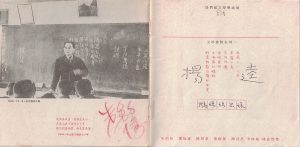
Yang Kui and the Young Taiwanese Protest Singer Chu Yueh-Hsin
8 items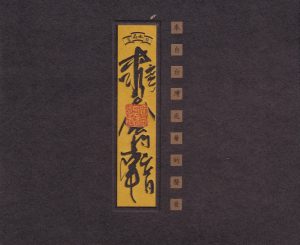
Collection and Modulation: The Public Archive Consciousness of Crystal Records
5 items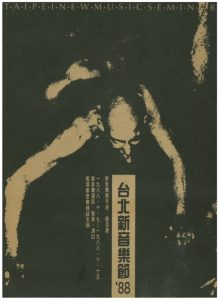
Operates Beyond the Vulgar: Crystal Records
2 items